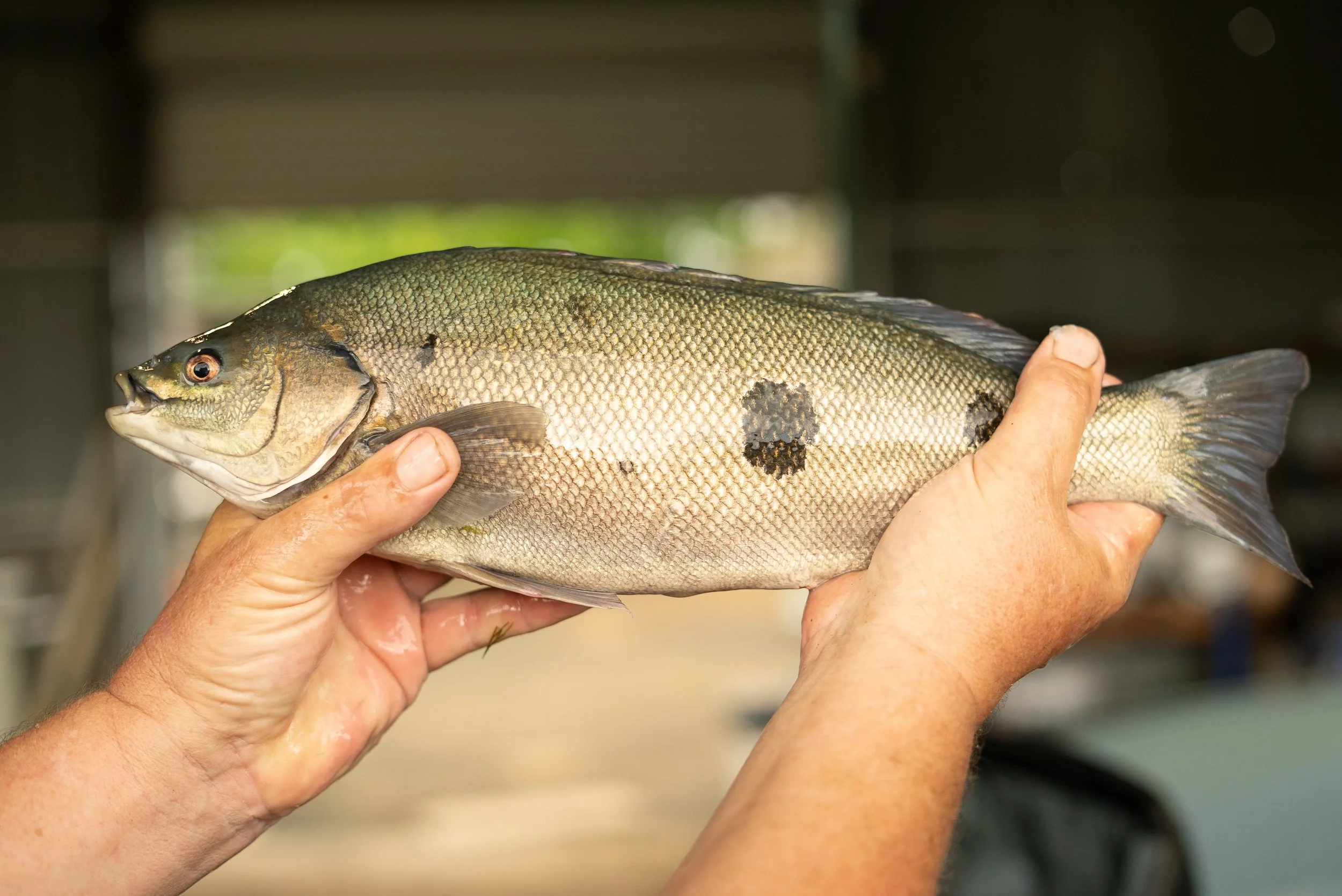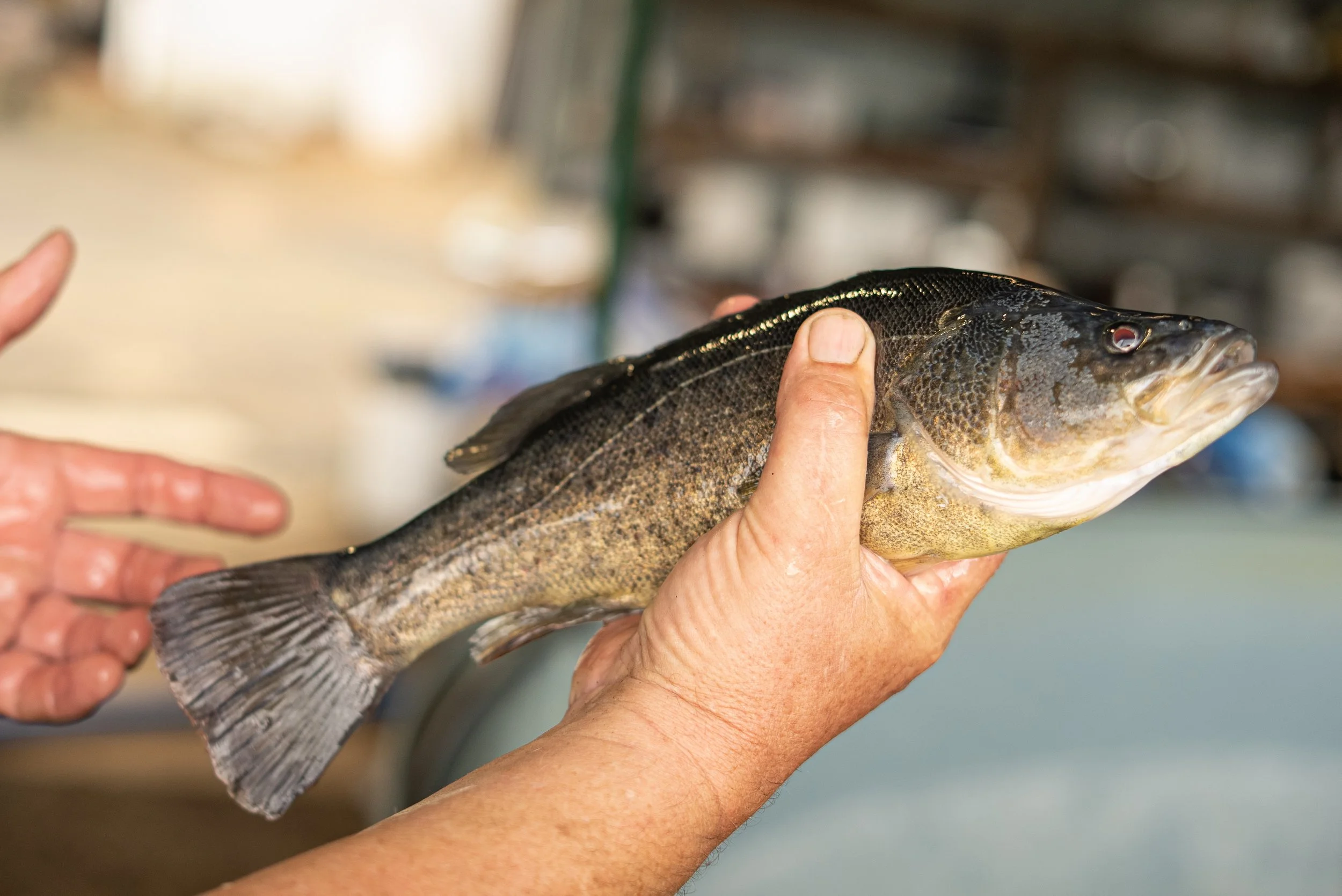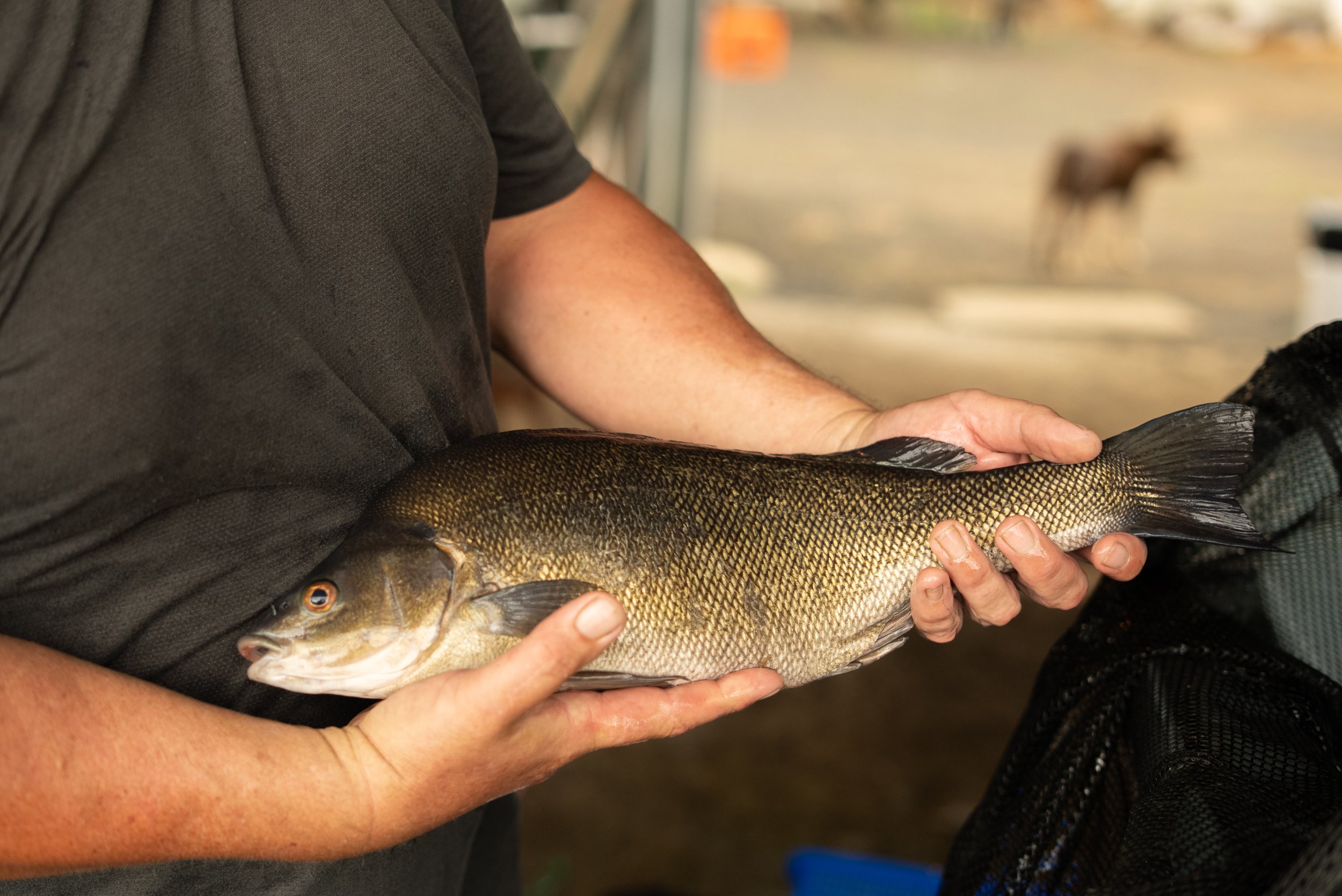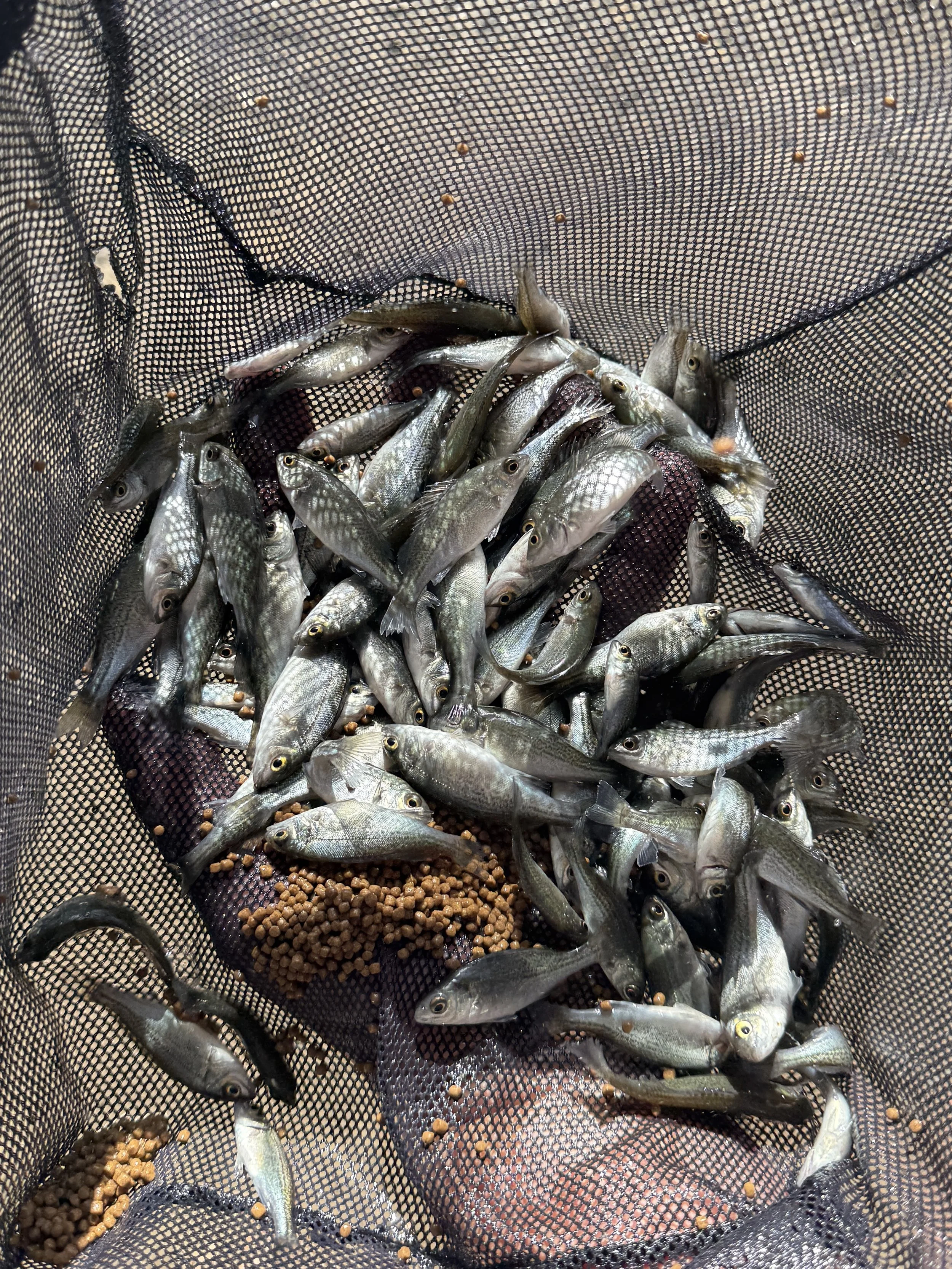
We proudly supply


Explore our fish species
-
Australian Bass are a popular choice for farm dams thanks to their hard-fighting nature and great eating quality.
A carnivorous freshwater fish, they thrive in clean, clear water and are well-suited to temperatures between 10°C and 26°C. Growing quickly, they commonly reach 600-
800 grams within two years and can grow to over 4 kilograms.
Highly regarded by anglers for their aggressive strikes and strong fight, Australian Bass are an excellent option for landholders wanting an exciting sport fish that also performs well on the table.
For best results, Australian Bass can be stocked at a rate of approximately one fish per 2 square metres, or around 2,000 fish per acre.
-
Barramundi, or "Barra," are an iconic Australian sport fish and a popular choice for suitably located farm dams. A fast-growing, carnivorous species, they are renowned for their explosive strikes, powerful fights, and spectacular surface-breaching runs.
Barramundi thrive in warm conditions, preferring temperatures between 18°C and 29°C, and can grow rapidly-often reaching around 600 grams within their first six months-before slowing as they mature. They are excellent eating and can reach impressive sizes of over a metre in length.
Due to their aggressive and territorial nature, Barramundi are best stocked alone. Stocking rates are approximately one fish per 5 square metres (around 800 fish per acre). They must only be stocked in approved areas, as it is an offence to stock Barramundi south of the Mary River catchment.
-
Golden Perch, also known as Yellowbelly or Callop, are a hardy and popular choice for farm dams. A carnivorous freshwater species, they are well known for their strong strikes and solid fighting ability, making them a favourite with anglers.
Golden Perch typically reach 600-800 grams in around two years and commonly grow to under 5 kilograms, though much larger fish are possible. They tolerate a wide range of conditions, coping with temperatures from 4°C to 37°C and a broad pH range, which makes them well-suited to many dam environments.
While they can be difficult to train onto artificial feed, Golden Perch are considered good eating, with soft-textured flesh. For dam stocking, they are generally stocked at a rate of around one fish per 2 square metres, or approximately 2,000 fish per acre.
-
Jade Perch, also known as Barcoo Grunter, are ideal for aquaponics and recirculating tank systems, but they are not permitted for stocking in dams. They are a resilient and fast-growing freshwater fish well suited to controlled environments.
An omnivorous species, they feed on a wide variety of natural foods, including zooplankton, small crustaceans, aquatic insects, molluscs, algae, and plant material.
They readily accept artificial feed from the fingerling stage, and some individuals have been recorded at weights of up to 3.5 kilograms.
Jade Perch are considered excellent eating and are highly regarded for their nutritional value, with research showing Queensland Jade Perch contain exceptionally high levels of beneficial omega-3 oils. They tolerate a wide range of temperatures and pH levels, and grow up to twice as fast as Silver Perch.
-
Silver Perch are a versatile and popular freshwater fish, making them an excellent choice for farm dams. As omnivores, they can take advantage of a wide range of natural food sources and also respond very well to artificial feeding.
Silver Perch typically grow at a rate of around 600-800 grams per year, commonly reaching 1-3 kilograms, with the potential to grow as large as 8 kilograms. They are highly tolerant of varying conditions, coping with temperatures from 3°C to 37°C and a broad pH range, which makes them well-suited to dam environments.
Considered good eating, Silver Perch can occasionally develop a mild "weedy" flavour. Highly regarded by anglers, they are strong, hard-fighting fish. For dam stocking, Silver Perch are generally stocked at a rate of around one fish per 2 square metres, or approximately 2,000 fish per acre.
-
Sleepy Cod, also known as Sleeper or Sleeper Gudgeon, are a bottom-dwelling carnivorous fish well suited to farm dams.
They grow to around 500 grams in two years and can reach up to 450 mm in length and 3 kilograms in weight. Sleepy Cod can breed successfully in dams and thrive in temperatures between 22°C and 27°C, with a pH range of 6.8 to 8.
While they are a popular angling species, their slow-moving nature means they do not provide the same level of sport as faster fish. They are highly regarded for their excellent eating quality, with sweet, white flesh.
For dam stocking, Sleepy Cod are generally stocked at a rate of one fish per 5 square metres, or around 800 fish per acre.
Explore our range of fish species available and practical guidance to successfully stock and grow your fish.